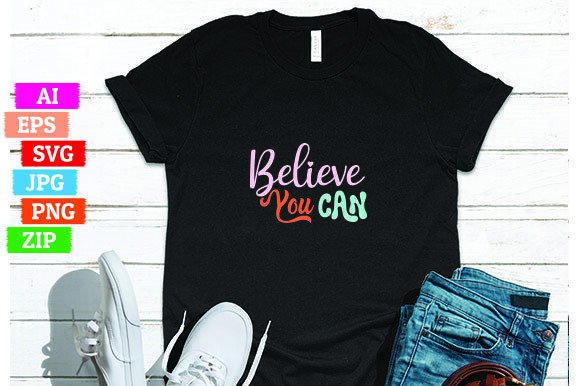
Believe You Can: A Designer's Take on This Motivational Graphic
As a designer who spends more time staring at stitch maps than most people care to admit, I approach every new embroidery project with a mix of excitement and skepticism. We have all seen the flood of motivational text designs flooding the market, but few actually translate well from a screen to a finished product. That is why I took a close look at the Believe You Can design. While the product listing categorizes this under Freebies and Graphics, specifically noting it as an editable AI and SVG file intended for print-on-demand, my mind immediately went to how this could be adapted for machine embroidery and tangible handmade goods.
First Impressions and Visual Personality
The first thing that strikes me about Believe You Can is its clean, assertive typography. In the world of design assets, simplicity often wins, especially when the goal is to convey a message quickly. The layout feels balanced, with a visual weight that suggests confidence without being overly aggressive. For an embroidery designer, this is crucial. When you are converting a graphic into a machine embroidery design, complex serifs or overly thin lines can turn into a nightmare of thread breaks and poor coverage. This design appears to have the structural integrity needed for stitching.
The mood it creates is one of empowerment. It is not just a phrase; it is a call to action. This makes it incredibly versatile for a wide range of applications, from custom apparel to home decor. The visual personality is modern and minimalist, which fits perfectly with current trends in boutique branding and small shop products. It avoids the cluttered look that often plagues free design resources, offering a professional aesthetic that can elevate a brand rather than cheapen it.
Real-World Application: The Tote Bag Scenario
To truly evaluate this design, I imagined a specific real-life scenario: preparing a custom order for a local yoga studio looking for personalized gift items for their instructors. They wanted something durable, washable, and inspiring. Believe You Can jumped out as the perfect candidate for a heavy canvas tote bag design.
In this context, the boldness of the text would stand out beautifully against a natural or dark fabric background. Unlike intricate applique design work that might get lost in the weave of a canvas, a text-based graphic like this commands attention. If I were digitizing this SVG for embroidery, I would likely opt for a dense fill stitch to ensure full coverage, perhaps bordering the letters with a tight satin stitch to give them definition and a premium feel. The result would be a handmade product that feels substantial and valuable, exactly what a client expects when paying for custom work.
Beyond tote bags, this design translates exceptionally well to sweatshirt embroidery. The soft curves of the potential lettering (depending on the specific font style chosen during editing) would drape nicely over the chest of a hoodie or crewneck. It is also a strong contender for baby embroidery, perhaps scaled down for a onesie or a nursery wall hanging, offering a gentle reminder of growth and potential.
Navigating Technical Challenges
However, no design is without its challenges, and a responsible reviewer must point out where caution is needed. While Believe You Can is visually strong, its success in embroidery depends heavily on execution. One major consideration is stitch density. If the letters are too close together, the fabric between them might pucker, especially on stretchy materials like jersey knits used for t-shirts. A skilled digitizer would need to adjust the pull compensation and potentially widen the spacing slightly to maintain clarity.
Another factor is the choice of hoop size. Depending on the final dimensions required for a project like a cap or a small pocket, the design might need to be scaled down. When reducing text-based graphics, tiny details can vanish. If the design includes any decorative swashes or fine connectors, these could become fragile points in an embroidered patch or a high-wear item like an apron. Testing on scrap fabric is non-negotiable here. You need to see how the thread colors interact with the fabric texture before committing to the final piece.
Furthermore, working with dark fabrics requires strategic planning. A white or light-colored thread on a black sweatshirt looks crisp, but it requires a solid underlay to prevent the fabric from showing through the stitches. Without proper stabilization, the text might look sparse or uneven. For curved surfaces like caps, the distortion of the fabric can warp the straight lines of the text, so a specialized cap frame and careful hooping technique are essential to keep Believe You Can looking straight and professional.
Impact on Brand and Customer Trust
For Etsy sellers and creative entrepreneurs, the choice of design directly impacts perceived value. Using a high-quality, well-thought-out graphic like Believe You Can signals professionalism. It tells the customer that you care about the message you are putting out into the world. In contrast, using a poorly constructed freebie can result in a finished product that looks amateurish, with thread breaks or unclear lettering that erodes customer trust.
This design has the potential to enhance brand consistency. If you run a shop focused on wellness, fitness, or education, this phrase aligns perfectly with your mission. It becomes more than just decoration; it becomes part of your brand story. Whether used in holiday embroidery for gifts or as a staple item in your year-round catalog, the clarity of the message fosters buyer engagement. People connect with positivity, and a well-executed embroidery project featuring this text can become a bestseller.
Practical Notes for the Embroiderer
Before you dive into production, here are a few practical steps to ensure success with this asset:
- Verify File Compatibility: The product description lists editable AI and SVG files. These are vector graphics ideal for print or digitizing, but they are not ready-to-stitch embroidery files. You will need to digitize them yourself or hire a digitizer to convert them into the correct format for your machine.
- Test Thread Contrast: Experiment with different thread colors against various fabric backgrounds. Sometimes a tonal look works best, while other times high contrast is necessary for readability.
- Check Licensing Terms: Even though this is listed under Freebies, always double-check the license agreement. Ensure you have the rights to use the design for commercial purposes if you plan to sell small shop products or digital derivatives.
- Stabilizer Selection: Match your stabilizer to your fabric. Cut-away stabilizer is usually best for stretchy garments to prevent distortion over time, while tear-away might suffice for stable woven fabrics like tote bags.
- Mockup Testing: Create printable mockup versions in black and white to check the legibility of the text at different sizes before you ever thread the needle.
In conclusion, Believe You Can is a promising asset for those willing to put in the technical work to adapt it for embroidery. It offers a strong foundation for creating meaningful, high-value commercial embroidery projects. With careful attention to digitization, fabric choice, and finishing techniques, this design can transform from a simple graphic into a powerful, tangible piece of art that resonates with customers and elevates your craft business.